
Types of Trauma Therapy, Explained: How to Choose

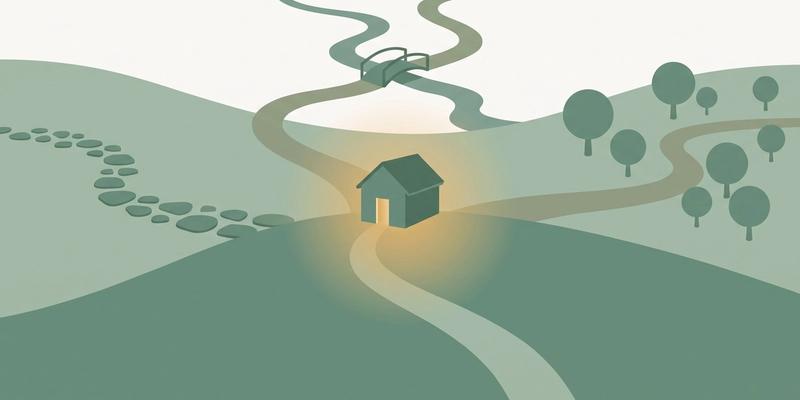
A pattern I meet often in first phone calls goes like this. Someone has finally decided to look at what happened to them and by the time they reach me, the method has already been chosen for them: it must be EMDR because EMDR is what put a friend back together. The homework is sincere and it is aimed at the wrong question. Which therapy is a later decision. The earlier one is which door.
The main types of trauma therapy are body-based approaches such as Somatic Experiencing, parts-based work such as Internal Family Systems, memory-reprocessing methods such as EMDR, thought-focused approaches such as CBT, and skills-first programmes such as DBT. Each works through a different door: the body, the parts, the memory, the thoughts, or the daily skills that make the rest possible. None of them is best for everyone.
So let me walk you through the map properly. I want to start with why trauma asks for more than insight and willpower, then take the main approaches one at a time, what each looks like from the inside and what the research honestly says about it, and finish with the part most guides skip: how to actually choose and what the options look like here in Singapore.
Trauma needs a different door, not more willpower
If understanding were enough, most people would already be fine. They have read the articles. They can narrate their childhood with accuracy and even compassion. And the body carries on regardless: the jaw that will not unclench, the numbness that arrives exactly when closeness does.
That gap exists because trauma is not stored as a tidy story that better thinking can edit. It lives on as a state in the nervous system, a readiness to fight, flee, or shut down that never received the all-clear. The oldest parts of the brain that hold that state do not speak in arguments, which is why willpower and insight, both genuinely useful, so often stall here.
Every approach below is a different answer to the same question: if the front door of rational conversation is not enough, which other door do we use?
The main types of trauma therapy
Here is the landscape, one approach at a time. Two of these have full companion guides on this blog, so I will keep those short and point you deeper.
Somatic Experiencing: helping the body finish
Somatic Experiencing, or SE, was developed by Peter Levine from an observation about wild animals: they face constant threat yet rarely stay traumatised because after danger passes their bodies visibly discharge the survival energy and ours have learnt to hold it in. SE works with the felt sense, the body's moment-to-moment experience, touching the edge of the stored activation in small doses and returning to steady ground, so the interrupted survival response can finally complete. You do not have to retell the worst of the story for this to move.
The evidence base is growing rather than settled; the first randomised controlled study, published in the Journal of Traumatic Stress in 2017, found meaningful reductions in post-traumatic symptoms. I have written a full plain-language guide in What Is Somatic Therapy?
Internal Family Systems: no part of you is the enemy
Internal Family Systems, or IFS, developed by family therapist Richard Schwartz, starts from the way people already talk: part of me wants to leave, part of me is terrified to. IFS works with those parts directly, the protectors that run your days, and the young, wounded parts they guard, helping a calm core the model calls Self lead the system. For trauma that was relational, repeated, or wrapped in shame, this permission-based pace is often what makes the work bearable.
Its research base is young and promising; the model is honest about that. The full guide is here: What Is IFS Therapy?
EMDR: reprocessing the memory itself
Eye Movement Desensitisation and Reprocessing, developed by psychologist Francine Shapiro in the late 1980s, works directly with how a distressing memory is stored. In a highly structured protocol, you hold a fragment of the memory briefly in mind while following guided eye movements and the memory gradually loses its present-tense charge: still yours, no longer ambushing you. It involves far less narrating than classic exposure work and for single-incident trauma it can be strikingly efficient.
EMDR is one of the most-studied trauma treatments in existence. The World Health Organization's 2013 guidelines name trauma-focused CBT and EMDR as the recommended psychotherapies for post-traumatic stress; the American Psychological Association recommends it with slightly more caution; and a 2024 state-of-the-science review led by trauma researcher Ad de Jongh sums up decades of trials.
Honesty about my own toolkit: I do not practise EMDR itself. I am certified in two adjacent eye-based methods, brainspotting (developed by psychotherapist David Grand in 2003, working with fixed eye positions) and Multichannel Eye Movement Integration, or MEMI (which uses the whole visual field). Both sit in the same territory of processing without extensive retelling and both have younger evidence bases than EMDR, which I say plainly. When EMDR specifically is the right fit, I say that too and refer.
CBT: working with what trauma taught you to believe
Cognitive behavioural therapy is the approach most people have already heard of, built on the link between thoughts, feelings, and behaviour. Trauma does not only leave a residue in the body; it installs conclusions. The world is not safe. It was my fault. If I let anyone close, I will be hurt again. CBT surfaces those beliefs, examines them against evidence, and tests new responses in structured, practical steps, with real work between sessions.
It carries the deepest evidence base in the field and trauma-focused forms of CBT, including cognitive processing therapy, sit alongside EMDR in the WHO's first-line recommendations. Where body-based work moves from the bottom up, CBT works from the top down; many people eventually need some of both.
TRE: the shake your body never got to have
Tension and Trauma Releasing Exercises, created by trauma therapist David Berceli, take the animal logic of SE in a practical direction. A short sequence of positions gently tires specific muscles until the body's own tremor mechanism switches on: an involuntary, surprisingly ordinary shaking that helps the system discharge held tension. Once learnt safely with a practitioner, it becomes a self-regulation skill you keep.
The honest evidence label is early: a handful of small studies, not yet the trial base the approaches above carry. I hold TRE as a regulation practice alongside therapy rather than a standalone treatment. If the whole idea of coming back to the body is new, start gentler still, with grounding.
DBT: skills first, depth later
Dialectical behaviour therapy, developed by American psychologist Marsha Linehan, was built for people whose emotions arrive as floods. It teaches four families of skills: mindfulness, distress tolerance, emotion regulation, and interpersonal effectiveness. For complex trauma, especially where there is self-harm, suicidal thinking, or heavy dissociation, DBT answers the question that must come first: how do we make daily life survivable before we open anything?
Adaptations of DBT for post-traumatic stress, developed with Linehan's cooperation, have shown meaningful results in trials with survivors of childhood trauma. Skills first is not a delay. For some nervous systems it is the only responsible order.
The approaches side by side
| Approach | Works through | Often fits when | Evidence, honestly |
|---|---|---|---|
| Somatic Experiencing | The body and nervous system | You understand your story; your body has not caught up | Growing; first RCT in 2017 |
| IFS | The parts of you in conflict | Harsh inner critic, inner war, shame, relational wounds | Young and promising |
| EMDR | The stored memory | Specific events still replay as flashbacks or nightmares | Extensive; WHO first-line |
| CBT (incl. trauma-focused forms) | Thoughts and beliefs | Trauma has hardened into rules that run your life | Deepest base in the field |
| TRE | The body's own tremor | You want a learnable self-regulation practice | Early; small studies |
| DBT | Skills for flooding emotions | Feelings overwhelm fast; safety has to come first | Strong at home; growing for trauma |
A table cannot hold the most important variable, which is you, in a room, with a particular therapist. That is where choosing actually happens.
How to choose and the mistakes worth avoiding
Three mistakes appear again and again. Each is understandable.
The first is choosing a brand before a door. The method arrives pre-decided, borrowed from someone else's recovery.
What healed your friend is evidence about your friend.
Their nervous system, their season of life: not yours. Decades of comparative outcome research, summarised by psychotherapy researchers Bruce Wampold and Zac Imel, keep finding that no bona fide approach wins for everyone and that the fit between person, therapist, and moment predicts more than the method's name.
The second is assuming one method should fit all of you, for the whole journey. Needs change by season. Someone may need stabilising skills this year and memory work next year; a body that was unreachable in January may be ready by June. Good trauma therapy is staged and the right first stage is often not the impressive one.
The third is over-researching. Some people arrive with comparison spreadsheets, five tabs of modality reviews, months of reading behind them, and no first appointment.
Research can quietly become the safest way of not starting.
Thoroughness feels like control and control is precisely what trauma once took away, so the pull makes sense. If that is you, here is something small to try tonight: notice what the reading does in your body. If each new article settles you, it is preparation. If it winds the spring tighter, the research may be protecting you from the phone call.
What helps more than comparing brands is bringing four questions to a first conversation:
- Which door feels least frightening to begin at: the body, the parts, the memory, or the thoughts?
- Do I need steadiness first, before anything deep is opened?
- How do I feel in the room with this particular person?
- Is this therapist honest about what they do not offer?
That last question is a quiet test of the whole relationship. A therapist who can say "that is not mine and here is who does it well" is showing you how they will handle every other limit too.
If posts like this are useful to you, you can subscribe at the bottom of the page to be notified when new posts are up.
What trauma therapy looks like in Singapore
Practically: you do not need a referral to see a psychotherapist or psychologist in private practice here. Psychiatrists are the door for medication and formal diagnosis. The three roles are commonly confused, so I have written a plain guide to who does what. Subsidised routes exist through polyclinic referral to the public system and the Institute of Mental Health, with longer waits attached.
In my own practice, the work is trauma-informed and body-aware: Somatic Experiencing (professional training underway) and IFS parts work are the two core lenses, alongside certifications in brainspotting, MEMI, and TRE, with sessions in English and Mandarin. I do not run a fixed protocol. I move between body-based work and parts work as we go, letting what your nervous system can use, this season, set the order.
You do not need to arrive knowing the right answer. Arriving with the question is enough; a first conversation exists precisely to work out the right door, the right pace and whether someone else would serve you better.
The best trauma therapy is not the most impressive one on paper. It is the one your nervous system can actually say yes to.
Common questions, answered quickly
What is the most effective therapy for trauma?
There is no single winner. Trauma-focused CBT and EMDR carry the largest evidence bases and are the WHO's first-line recommendations but comparative research keeps showing that fit between the person, the therapist, and the approach predicts outcomes better than the method's brand name.
Do I have to retell my trauma in detail for therapy to work?
No. Exposure-based forms of CBT do involve structured retelling and they help many people. Body-based approaches like Somatic Experiencing, and eye-movement methods like EMDR and brainspotting, need far less narration because they work with how the experience is held now rather than the full story of what happened.
How long does trauma therapy take?
It depends on what is being carried. Work on a single overwhelming event can be relatively brief; EMDR in particular can move quickly there. Complex or developmental trauma unfolds in stages, with steadiness built before memories are approached, and is better measured in months than weeks. Slow is usually the method, not a failure of it.
Can trauma therapy work without medication?
Often, yes. Psychotherapy is a first-line treatment for post-traumatic stress in its own right. Medication, prescribed by a psychiatrist, can support sleep, anxiety, or depression alongside the work and for some people that combination is what makes therapy usable. Neither cancels the other.
Further reading
- World Health Organization. Guidelines for the Management of Conditions Specifically Related to Stress. WHO (2013). ncbi.nlm.nih.gov/books/NBK159723
- Ad de Jongh and colleagues, trauma researchers. State of the Science: Eye Movement Desensitization and Reprocessing (EMDR) Therapy. Journal of Traumatic Stress (2024). doi.org/10.1002/jts.23012
- Peter Levine, developer of Somatic Experiencing. Waking the Tiger: Healing Trauma. North Atlantic Books (1997).
- Richard Schwartz, founder of Internal Family Systems. No Bad Parts: Healing Trauma and Restoring Wholeness with the Internal Family Systems Model. Sounds True (2021).
- Bruce Wampold and Zac Imel, psychotherapy researchers. The Great Psychotherapy Debate: The Evidence for What Makes Psychotherapy Work, second edition. Routledge (2015).
- TRE Global. Research library on Tension and Trauma Releasing Exercises. treglobal.org/research
A note on this post
This post is educational and is not a substitute for psychotherapy. If you are weighing these approaches and would like to think it through with someone rather than alone, a free 20-minute discovery call is a low-pressure place to start. You are welcome to Book a Consultation or Explore Working Together.
If you are in crisis in Singapore, please reach out now. Samaritans of Singapore (SOS) is available at 1767. The Institute of Mental Health 24-hour helpline is 6389 2222. In an emergency, call 999.
Also read
- What Is Somatic Therapy? A Plain-Language GuideYou understand your patterns and still feel them in your body. A Singapore psychotherapist explains somatic therapy and Somatic Experiencing, plainly.
- What Is IFS Therapy? Where No Part of You Is BadOne part of you wants to rest; another will not allow it. A Singapore psychotherapist explains Internal Family Systems, the therapy with no bad parts.