
Burnout Symptoms: What Rest Cannot Fix

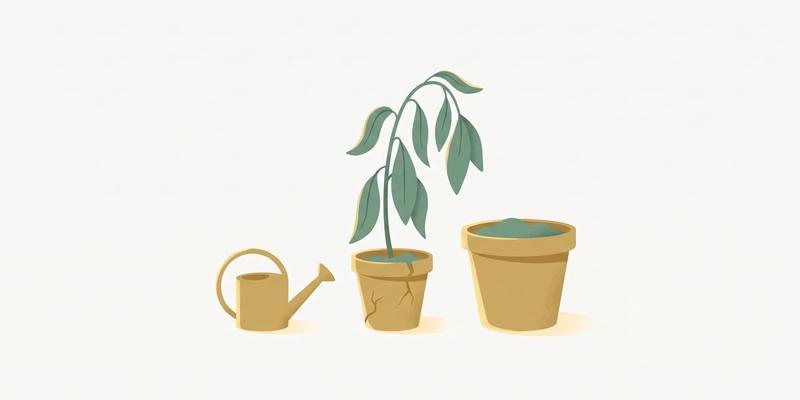
You did the responsible thing. You cleared the leave that had been rolling over for two years. You went somewhere with a pool, or you stayed home and slept. For a few days it almost worked. Then Sunday evening arrived, the work phone came back on, and the tiredness was waiting for you exactly where you left it, as if the week had never happened.
That is the tell. Tiredness responds to rest. Burnout does not. Burnout was never only about energy.
Burnout feels like exhaustion that rest does not repair, a growing cynicism about work that used to matter, and a sinking sense of being less capable than you were. Those are the three marks of the World Health Organization's definition and they point at chronic workplace stress, not personal weakness.
That definition comes from the International Classification of Diseases and it is more useful than most people realise. Burnout is classified not as a medical condition but as an occupational phenomenon: a syndrome resulting from chronic workplace stress that has not been successfully managed. It shows up along three dimensions:
- Exhaustion: the depletion everyone expects
- Mental distance: a growing negativism or cynicism about work that used to matter to you
- Reduced effectiveness: the one that frightens high performers most, a sinking sense of no longer being good at the thing you were always good at
Notice what that definition locates the problem in. Not your resilience. Not your mindset. The chronic stress of the workplace itself, unmanaged for too long.
I want to start with how burnout actually feels from the inside, then look at why the holiday did not work, what the numbers say about Singapore, what repair involves given that rest is not it, and, because the two are so often confused, how to tell burnout apart from depression.
What it actually feels like from the inside
Definitions are tidy. The lived experience is not, so here is the fuller symptom map, the one clients describe long before they use the word burnout.
In the body, sleep stops repairing you. You can be exhausted at 10pm, wide awake at midnight, and heavy by 7am. You catch every bug going around the office. Headaches and a tight jaw become background weather. Coffee stops working and you drink it anyway.
In your feelings, the loudest symptom is often an absence. Things flatten. The project that would once have excited you produces nothing. Irritability arrives on a hair trigger, usually aimed at the people who least deserve it, because they are the ones you feel safe enough to be depleted around. And underneath sits the cynicism the WHO names: a voice that says none of this matters anyway, which sounds like an attitude problem and is actually a protective crouch. Caring less is how a depleted system tries to conserve what little is left.
In your thinking, concentration frays. You read the same email three times. Small decisions, what to eat, which task first, feel disproportionately heavy because decision-making runs on the same depleted fuel as everything else. Many people quietly fear this is cognitive decline. It is almost always load.
And in your days, a strange loop appears: you procrastinate more, then panic and overwork to compensate, then need to recover from the overworking, then fall further behind. From the outside it looks like inconsistency. From the inside it is a system alternating between two failing strategies. And if the overwork half of that loop runs on fear rather than ambition, that is often high-functioning anxiety working underneath; the two patterns feed each other.
Caring less is not who you have become. It is how a depleted system protects itself.
Why the holiday did not work
If burnout were a fuel problem, leave would fix it. It does not. Two research traditions explain why from different angles.
The first is the work of social psychologist Christina Maslach, who has studied burnout for over four decades and built the instrument most burnout research runs on. With her collaborator Michael Leiter, she argues that burnout is best understood not as a weakness in the person but as a mismatch between the person and the job. Their research points to six areas where the fit breaks down:
- Workload: the overload everyone can see, and only the most visible of the six
- Control: no real say over how you work
- Reward: recognition that never arrives
- Community: a team that feels corrosive to be inside
- Fairness: rules that apply unevenly
- Values: a job that quietly asks you to act against what you believe
Read the list again and the holiday problem becomes obvious. A week away rests the worker and changes nothing about the mismatch. You return, better slept, to the same absent recognition and the same values conflict.
You cannot sleep your way out of a values conflict.
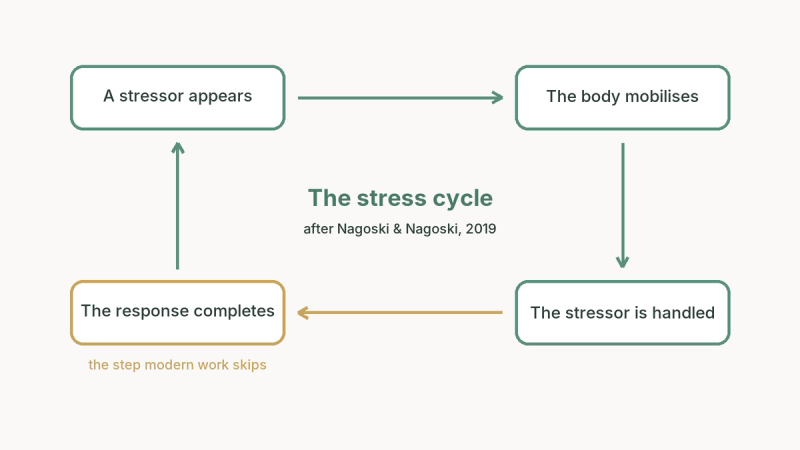
The second angle comes from health educator Emily Nagoski and conductor Amelia Nagoski, whose book on burnout makes a body-level distinction that fits everything I see in the therapy room: dealing with the stressor and completing the stress response are two separate processes. Your body does not know the report was submitted. The stress the deadline poured into your system stays in your system until something physical closes the loop: movement, a proper exhale, a real laugh, being held by someone safe. Modern working life removes the stressor at a desk and completes nothing, which is how years of technically finished stress accumulate in one nervous system.
The Singapore version of this
Burnout is not a Singapore invention but this city runs some of its conditions at full volume. In Employment Hero's 2024 Wellness at Work report, 61 per cent of Singapore workers reported burnout, among the highest rates in the countries surveyed, a figure barely moved from two years earlier. The Ministry of Manpower's own iWorkHealth data tells a similar story, with roughly one in three workers reporting work-related stress or burnout.
Underneath the numbers sits something harder to survey: a culture where output is worth, where being busy is a personality, and where resting reliably produces the feeling of falling behind. Many of the professionals I work with do not experience rest as recovery at all. They experience it as risk. If that tug of war sounds familiar, the pattern has its own post: why you feel torn between pushing through and resting.
There is usually also an inside driver holding the outside conditions in place. The part of you that cannot put the laptop down at 11pm learned somewhere, often early, that worth had to be earned and re-earned and that saying no was dangerous. Workplaces did not create that part. They simply reward it more than anywhere else does.
If posts like this are useful to you, you can subscribe at the bottom of the page to be notified when new posts are up.
What repair looks like, since rest is not it
None of this means rest is pointless. It means rest is necessary and not sufficient. Repair works on the things the holiday could not reach.
Name the mismatch first. Take Maslach and Leiter's six areas (workload, control, reward, community, fairness, values) and locate yours honestly. This matters because each mismatch has a different repair. An overload problem needs negotiation and subtraction. A control problem needs autonomy carved back, even in small territories. A values problem may eventually need an exit plan and knowing that early is kinder than discovering it after two more depleted years.
Close the loop daily rather than annually. The Nagoskis' insight converts into something small: the body needs a physical signal, most days, that the stress has ended. A brisk walk between the MRT station and home with the phone in your bag. Ten slow breaths where the exhale outlasts the inhale. If grounding is unfamiliar territory, this guide walks you into it gently. If you want the structured version, the free stress management worksheet walks you from stressors to a printable plan in about ten minutes.
Then comes the deeper work, which is where psychotherapy earns its place: meeting the part of you that keeps signing you up for depletion, understanding what it is protecting, and building a sense of worth that does not require this quarter's output as evidence. That work changes not just this burnout but your relationship to the next demanding season.
And if you lead a team, the research is inconveniently clear that burnout is an organisational condition before it is a personal one. Workshops and one-to-one support have their place and I deliver both through my training and EAP work. But the six mismatches live in how work is designed and that is leadership's work to repair.
Is it burnout or depression?
Burnout and depression overlap and the border matters. Burnout is tethered to work: weekends and holidays bring partial relief and the cynicism points at the job. Depression comes untethered: the flatness follows you into things you love, hope thins out everywhere, and worthlessness stops being about performance. When that flatness sits underneath a life that still looks productive from the outside, high-functioning depression is the fuller picture. If the heaviness has gone global, if nothing brings relief, or if you have had thoughts of harming yourself, please treat that as a signal to speak to a professional promptly rather than a stronger version of tiredness. Your GP and the crisis lines below are both right doors and this guide to who does what can help you choose the next one.
Back at the desk
The leave did not fail because something is wrong with you. It failed because it was treating the wrong thing. The exhaustion was never asking for a better holiday. It was asking for a different relationship between you and your work: fewer mismatches outside, a quieter driver inside, and a body that gets to finish its stress more often than once a year.
Tiredness asks for rest. Burnout asks for repair. Knowing which one you are carrying is the first real step out.
Common questions, answered quickly
What are the first signs of burnout?
Often the earliest signs are physical: sleep that stops repairing you, catching every passing bug, a tight jaw. Then feelings flatten, irritability arrives on a hair trigger, and cynicism creeps into work that used to matter. Concentration frays last, which is usually when people start searching.
Is burnout a medical diagnosis?
Not currently. The World Health Organization classifies burnout as an occupational phenomenon rather than a medical condition: a syndrome resulting from chronic workplace stress that has not been successfully managed. That framing matters because it locates the problem in the conditions, not in your resilience.
Is burnout the same as depression?
No, though they overlap. Burnout stays tethered to work: weekends bring partial relief and the cynicism points at the job. Depression comes untethered, following you into things you love. If the heaviness has gone global or nothing brings relief, please speak to a professional promptly.
How long does burnout recovery take?
There is no honest universal number. Recovery time tracks the mismatch behind the burnout: an overload problem can ease within weeks of real subtraction, while a values conflict may take longer and involve bigger decisions. Rest alone, however long, does not finish the job. The full recovery guide, stage by stage, is in Burnout Recovery Stages: How Long It Takes, What Helps.
Further reading
- World Health Organization. Burn-out an "occupational phenomenon": International Classification of Diseases. WHO Departmental News (2019). who.int
- Christina Maslach and Michael P. Leiter, burnout researchers. The Burnout Challenge: Managing People's Relationships with Their Jobs. Harvard University Press (2022).
- Emily Nagoski and Amelia Nagoski, health educator and conductor. Burnout: The Secret to Unlocking the Stress Cycle. Ballantine Books (2019).
- Employment Hero. Wellness at Work Report 2024: Singapore findings. employmenthero.com
Crisis support and a note on this post
This post is educational and is not a substitute for psychotherapy. If the exhaustion you are carrying has stopped responding to rest and you would like steady support to work on what is underneath it, you are welcome to Book a Consultation or Explore Working Together.
If you are in crisis in Singapore, please reach out now. Samaritans of Singapore (SOS) is available at 1767. The Institute of Mental Health 24-hour helpline is 6389 2222. In an emergency, call 999.
Also read
- Why You Feel Torn Between Pushing Through and RestingWhat if the part of you pushing through and the part asking for rest are both protectors? A Singapore psychotherapist on inner conflict.
- How to Stop Overthinking: It Is Not a Thinking ProblemOverthinking is rarely a thinking problem. It is often the mind's way of staying away from a feeling. A Singapore therapist's gentler reframe.