
Putting Down the Apologies That Were Never Yours

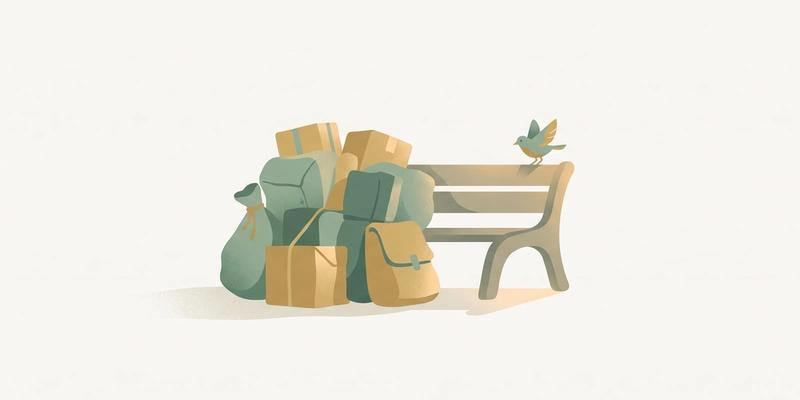
There is a particular way the word "sorry" shows up in the women who come into my therapy room. Soft. Quick. Almost habitual. Apologies for crying. Apologies for needing the tissue. Apologies for a parent who has expected too much of them that week. Apologies for a colleague who missed a deadline, as though the missing had happened through their own hands. Apologies for being in the room at all.
Listen closely and you begin to hear it everywhere: in group chats, at the office, in the kitchen when somebody else left the rice uncovered. What emerges across these conversations is not women apologising for mistakes they have made, but for mistakes made by others, or for expectations that were never theirs to meet.
If you keep apologising for things that were never yours, that is rarely politeness. It is usually self-abandonment: a learned habit of tuning so closely to what everyone else feels, wants, or needs that your own signal fades. Putting those apologies down begins with noticing them. I want to trace where the habit begins, the cultural weight that holds it in place, and how the putting down starts.
This pattern has a name. The psychologist Harriet Lerner spent decades tracing it, particularly in Why Won't You Apologize?, where she shows how women are taught early to apologise as a way of holding relationships together, and how that habit slowly hollows out the self.
A guidance system turned outward
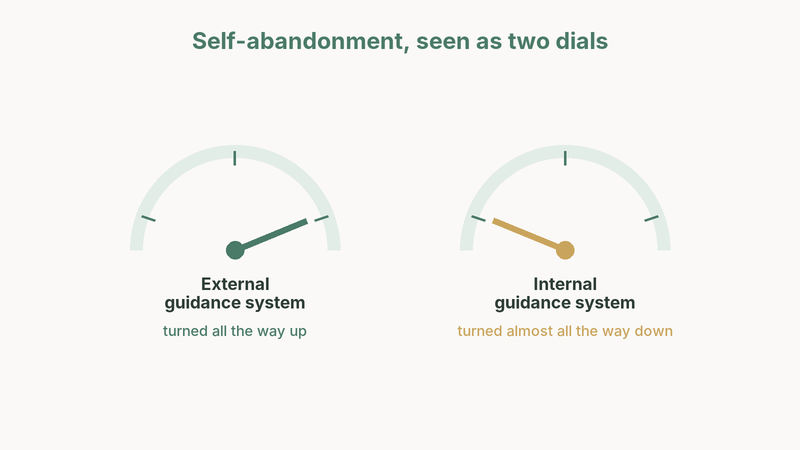
A newer framework from psychologists Avery Hoenig, Lucy Smith, and Jamie Wilson gives the pattern a sharper label: self-abandonment. Writing in Psychotherapy Networker, they describe two dials we each carry inside us. The external guidance system picks up signals from the world around us: the expectations of parents, the preferences of partners, the opinions of bosses, the quiet judgements of aunties at family dinners. The internal guidance system is the quieter voice in the gut. It knows what is tiring you, what is not yours, what matters.
Self-abandonment is what happens when the external dial is turned all the way up and the internal one is turned almost all the way down. Over time, you lose track of what you actually feel, want, or need. You become exquisitely sensitive to what everyone else feels, wants, or needs. You become the keeper of everyone else's comfort.
The cultural weight underneath
In Singapore, the pressure to be tuned outward starts early. Many women here grew up praised for being good daughters, helpful sisters, high-achieving students. Obedient, agreeable, low-maintenance. The Confucian script of filial piety rewards daughters who carry the family emotionally and logistically: the medical appointments remembered, the family WhatsApp group managed, the apology offered when an uncle says something unkind. Running alongside it, the kiasu undertow whispers that slowing down is falling behind, and that worth is measured in productivity, salary, and the schools your children get into.
Underneath both runs the shame Brené Brown maps in Atlas of the Heart, the shame women learn to carry around having emotional needs at all. A sense that wanting rest or help or to not be the one holding everything is somehow selfish. None of this is your fault. All of it shapes where you put your attention.
Apologising for what was never yours
In different forms, often in the same week, the same pattern shows up. A woman apologises because her mother has been calling someone she was told not to call. Another apologises because her husband forgot a school pickup and he has a lot on his plate.
Neither woman caused the thing she is apologising for. Each has been quietly assigned the work of repair. The apology is not really about manners. It is the small, ongoing tax of being the one who holds it together.
Over months and years, this takes a toll. She arrives at therapy exhausted, lonely, and confused. She cannot identify what she wants for dinner, much less what she wants from her life. She has been looking outward for so long that she has forgotten there is an inward to return to.
Noticing is the beginning
Self-abandonment does not unwind in a single session. It unwinds in small, repeated acts of returning to yourself.
Try this. Over the next week, listen for the word "sorry" as it leaves your mouth. You do not need to stop saying it. Just notice. Ask yourself, quietly, "Was that mine to apologise for?" If the answer is no, you do not need to correct anyone. You only need to register, inside, that the burden was not yours.
Then notice one small thing each day that your internal guidance system is trying to tell you. A tiredness behind the eyes. The tightness in the shoulders when a certain name flashes on your phone. A flicker of interest in something you have not made time for. These signals are not small. They are your way back to yourself.
A quieter way of belonging
There is a fear underneath self-abandonment that I want to name because it rarely gets named. The fear that if you stop carrying what is not yours, you will no longer be loved. That the family will fracture. That you will be seen as cold, selfish, not a good daughter.
In my experience, the opposite tends to happen. When a woman stops apologising for what was never hers, she becomes more present, more generous, more herself. Relationships shift. Some become closer, some become clearer. The ones that depended on her disappearing begin to ask for something more honest. And she begins to be able to offer it.
You are allowed to put your sorry down. Not all at once. Just the ones that were never yours to carry in the first place.
Further reading
- Harriet Lerner, psychologist. Why Won't You Apologize?: Healing Big Betrayals and Everyday Hurts. Touchstone, 2017.
- Avery Hoenig, Lucy Smith, and Jamie Wilson, psychologists. In Consultation: A Systemic Issue for Female Clients. Psychotherapy Networker, March/April 2026.
- Brené Brown, research professor. Atlas of the Heart: Mapping Meaningful Connection and the Language of Human Experience. Random House, 2021.
A note on this post
This post is educational and is not a substitute for psychotherapy. If you recognise yourself in this and feel ready to explore it with someone, you are welcome to Book a Consultation or Explore Working Together.